
Cricket betting odds in Great Britain: how the price is built and what it costs
 Available in US
Current as of October 30, 2026 · verified against the Gambling Commission’s public register
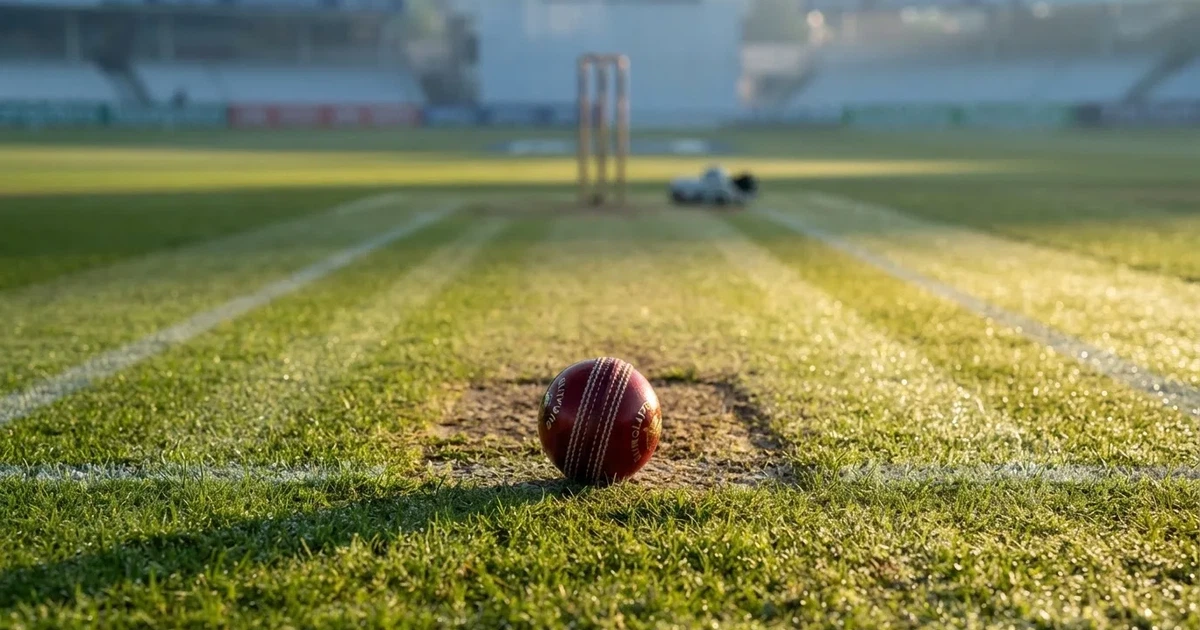
Cricket sits oddly in a British betting shop. Eleven players a side, three formats that play out over hours or days, a global calendar that runs almost year-round, and a settled-bets book that breaks down the contest into small, winnable events the punter can pick from before a single ball is bowled. Cricket betting odds reflect that shape: the headline price on the match-winner market is one number, the overround baked into it is another, and the long tail of innings runs, top-batsman, method-of-dismissal and fall-of-next-wicket lines is where the actual choice lives. The job of this page is to explain how those numbers are put together, what they actually pay, and which of the brands on the Gambling Commission’s public register are worth comparing for a punter who wants to bet on cricket from Great Britain.
The article covers the fundamentals the price rests on, the legal frame a GB punter sits inside, the safer-gambling tools that come with a Commission licence, the bonus and free-bet structures most brands attach to cricket, what a mobile app does and does not give the punter on a live match, the in-play and cash-out mechanics, the betting types and odds formats in everyday use, the sports and tournaments the calendar rests on, and a ten-brand comparison. A short calculation shows how the bookmaker’s margin sits inside a simple two-way price, and a closing FAQ answers the questions the price itself tends to leave open.
How cricket betting odds are actually set
Every price a bookmaker publishes is the same kind of object: a number at which the firm will both take the punter’s stake and lay it back, after a deduction the firm keeps whether the bet wins or loses. That deduction is the margin, also called the overround, and it is the reason a fair coin at even money should pay 2.00 each way and pays only 1.90. Cricket’s markets are unusually varied for a sport with so few end states. The match result in a Test can be a draw; in an ODI it cannot, but rain may make the match a no-result under Duckworth-Lewis-Stern; in a T20 a tie is broken by a super over. The price a brand prints for “England to win” already knows all of that, and the price for “total runs in the next over” knows even more. The job, for the punter, is to spot where the margin is thin and where the rule turns the bet against them.
The fundamental shape of the game. A cricket side has eleven players. The three international formats are Test matches (up to five days, two innings per side, with a minimum of ninety overs scheduled per day and a draw as a possible result), One Day Internationals (each side bats a fixed fifty overs, with a tie possible) and Twenty20 (each side bats a maximum of twenty overs, four overs per bowler, and a tie is broken by a super over). The same eleven-a-side logic governs domestic red-ball and white-ball competition, including county cricket and franchise leagues. The market structure follows the format: a Test match produces markets that last five days, an ODI produces markets that resolve within eight hours, a T20 produces markets that may be settled inside three.
The market set a GB bookmaker runs. A typical Commission-licensed sportsbook offers, on a high-profile international fixture, the match winner, the toss, the top batsman, the top bowler, the method of first dismissal, total runs per side, total runs in the opening partnership, runs in the next over, the fall of the next wicket at over X, man-of-the-match and dozens of player props. For a county fixture the menu is shorter; for a franchise T20 it sits somewhere in between. The set is the operator’s own commercial decision within its licence category — remote general betting standard (real events) — and is not set by statute.
The price the punter sees. A price is expressed in either fractional form (5/1, 11/4, evens) or decimal form (6.00, 3.75, 2.00), and a good sportsbook will let the punter pick which they read. Conversion from fractional a/b to decimal is a ÷ b + 1, so 5/1 is 6.00, 11/4 is 3.75, evens is 2.00. Decimal odds describe the total return per unit staked, including the stake itself. A £10 bet at 6.00 decimal pays £60 back, of which £50 is profit. Fractional odds describe the profit per unit staked: 5/1 means £5 profit for every £1 staked, with the stake returned on top.
The margin hiding in the price. A bookmaker’s margin is the slice of every pound staked that the firm keeps, on average, across a market. It is set by making every outcome’s implied probability sum to more than 100 per cent, and the gap between that sum and 100 per cent is the margin. Take a two-way market with decimal odds of 1.90 on each side. The implied probability of each side is 1 ÷ 1.90, or about 52.63 per cent, and the two together add to 105.26 per cent. The five-point-two-six gap is the margin: roughly 5.3 per cent of every pound staked on this market is kept by the firm on average. The narrower that gap, the better the price for the punter, and the wider the gap, the worse.
The calculation, run on a worked example. The plan asks for the margin on an illustrative two-way market priced at 1.90 / 1.90, and the result is a band rather than a single number, because a brand may price a market at 1.85 / 1.95 instead and still be in the same band. At 1.90 / 1.90 the payout share — the share of every pound staked that comes back to winning punters in the long run — is 1 ÷ (1 ÷ 1.90 + 1 ÷ 1.90), or 0.9500, and the margin is 1 minus that, or 0.0500. At 1.85 / 1.95 the same calculation gives a payout share of 0.9503 and a margin of 0.0497. At 1.95 / 1.85 the result is identical, because the margin is symmetric. The band to take from this is “around five per cent on a competitive two-way line”, and the trade-off it sets up is the one the rest of the page lives inside: a price the punter is happy to take is one where the implied margin is thin enough that the punter’s edge — whatever it is — can beat it.
The further-margin wrinkle on cricket. Cricket’s head-to-head markets are not the cleanest test of margin, because the draw exists in Tests and a rain-adjusted result exists in ODIs. A bookmaker’s outright Test price already covers three outcomes, not two; an ODI market with the no-result rule baked in may price each side at 1.90 with an active rule that voids the bet if the match is washed out. The margin on the three-way Test line is wider than the margin on a typical two-way football line, and the margin on a heavily-franchised T20 league is closer to two-way football than to Test cricket, because the market is liquid and the price is competitive. The punter who cares about margin reads the price of the market they actually bet on, not the headline match-winner line of a sport they never play.
What the odds do not tell the punter. A price is silent on how likely the firm actually thinks the event is. A bookmaker that prices England at 1.90 and India at 1.90 in a fifty-over game may genuinely see it as a coin-toss, or it may see India as a strong favourite and be protecting its book by holding a balanced position. The punter reads the price as a number, not as a probability estimate, and the price is the contract. Where the punter’s own probability estimate beats the implied probability from the price, the bet has a positive expected value; where it does not, it does not, regardless of how good the tipster sounded.
The legal frame for cricket betting in Great Britain
Cricket betting in Great Britain sits inside a single licensing regime: the Gambling Commission, the Gambling Act 2005, and the public register that lists every brand that holds a remote operating licence. There is no statutory list of permitted sports or markets; the test of whether a brand may take cricket bets from a customer in England, Scotland or Wales is whether the Commission has issued it a licence covering remote general betting standard (real events), and the test of whether the customer is betting lawfully is whether the brand holds one. Northern Ireland is outside the 2005 Act and operates under older law, so a brand licensed for Great Britain is not licensed for Northern Ireland, and the page treats GB licensing as the relevant frame throughout.
Who licenses the market. The Gambling Commission is a non-departmental public body sponsored by the Department for Culture, Media and Sport. It licenses the commercial market under the Gambling Act 2005, which covers Great Britain. Since the Gambling (Licensing and Advertising) Act 2014 an operator whose remote facilities are used in Great Britain needs a Commission licence wherever it is based: a Curaçao, Maltese or Gibraltar licence is not a substitute for a GB licence, and a brand cannot serve GB customers on the strength of one. The Commission’s public register can be searched by business name, trading name, domain or account number, and is the whole test of whether a brand holds a licence. A licensed operator may use .com as well as .co.uk, so the domain proves nothing; only the register proves anything.
The licence categories. Five categories of remote betting licence exist: remote general betting standard (real events), remote general betting standard (virtual events), remote general betting limited, remote pool betting and remote betting intermediary (the licence held by betting exchanges). All ten brands on the comparison further down hold the first of these, and that is what permits them to take cricket bets from GB customers. A financial spread betting firm is regulated by the Financial Conduct Authority, not the Commission, and a GB spread-betting customer has different protections. Spreadex, for instance, is regulated by the FCA for spread betting and by the Gambling Commission for fixed-odds betting, and the firm states that spread betting losses can exceed the deposit.
The minimum age and the identity check. The minimum age is 18. Since 7 May 2019 every Commission-licensed operator has to verify the customer’s name, address and date of birth before the first deposit or the first bet, including with a free bet or bonus. Anonymous play at a licensed site is no longer available. The check is run against public-record data and credit-reference data, and a customer who cannot pass it is refused. Midnite’s site cites Gambling Commission licence 101839 and presents the brand’s in-play and acca-builder features within that framework.
In-play and the limits on what may be bet on. GB bookmakers offer in-play betting on cricket, and the controls on it are the operator’s licence conditions and customer-protection duties rather than a statutory cap. There is no statutory list of permitted bets or markets, so an operator runs markets under its own rules and the Licence Conditions and Codes of Practice (LCCP). Esports are treated like any other event under the real-events licence category; virtual events are a separate category; bets on politics, TV shows and novelty markets are offered by GB bookmakers and no statutory prohibition on them was found. The punter who wants to know whether a particular market is available checks the brand’s site, not the statute book.
Bonuses and the advertising frame. Since 19 January 2026 the Commission has capped wagering requirements on bonuses at 10x: a £10 bonus at 50x would have needed £500 of qualifying bets, and under the cap no more than £100 of qualifying bets is required. Mixed-product promotions — an offer that requires gambling on two or more product types such as betting, casino, bingo and lottery — are banned. The cap is on the wagering condition, not on the headline value of a free bet, and the position on free bets with no wagering condition is not established. Advertising is not licensed by the Commission; it runs through the CAP Code (non-broadcast) and the BCAP Code (broadcast), enforced by the Advertising Standards Authority, alongside the LCCP marketing conditions. CAP Code section 16 requires marketing to be socially responsible, must not be of strong appeal to under-18s, and restricts who may appear in an advertisement — that rule concerns who may be featured in the ad, not who may bet. The “whistle-to-whistle” rule is an industry code: since 1 August 2019 betting advertisements have not been shown on TV from five minutes before a live sporting event to five minutes after it, before the 9pm watershed, with horse and greyhound racing excluded.
Tax. The player pays no tax on betting winnings in Great Britain (this is general information, not tax advice; a professional gambler should ask HMRC or an adviser). General Betting Duty is the operator’s tax on gross profits, currently 15 per cent; from 1 April 2027 a new remote betting rate of 25 per cent applies within it, while remote bets on UK horse racing, bets on self-service betting terminals in licensed premises, pool betting and in-person betting stay at 15 per cent. Whether operators pass duty through to odds is not established, and the page does not write that the player is charged duty. Spread betting has its own rates: 3 per cent on financial spread bets and 10 per cent on other spread bets.
The credit-card ban. Credit cards have been banned for gambling in Great Britain since 14 April 2020 under LCCP condition 6.1.2, including credit-card-funded payments through an e-wallet. Debit cards and bank-based payments are not covered by that ban. A British named-account rule, a state list of permitted payment methods and any rule for or against cryptocurrency deposits at licensed operators are not established, so the page describes payments qualitatively and only from each operator’s terms.
Offshore brands and the loss of it. A GB licence is compulsory at the point of consumption. Providing gambling facilities in Great Britain without the licence the Act requires is an offence under section 33 of the Gambling Act 2005 — aimed at the operator, not the customer — and a customer who uses an unlicensed site is not committing an offence. The cost is the loss of the protections a licence brings: no GAMSTOP coverage, no Commission complaints route, no approved dispute-resolution body, no British consumer redress if funds are withheld, no application of the 10x bonus cap, and no £150 vulnerability check. Enforcement is disruption, not blocking — cease-and-desist notices, search-engine referrals, registrar and host and payment-provider work, with court-order DNS blocking powers given or about to be given to the Commission. Honest framing: a licensed brand means identity checks, deposit limits, GAMSTOP, the bonus cap and the dispute route; an unlicensed brand means none of those protections and a possible loss of funds. Neither is the safe choice by default; the licensed choice is the protected one.
Safer gambling tools that come with a Commission licence
The safer-gambling frame a Commission-licensed operator sits inside is the second thing the licence buys the punter, after the dispute-resolution route. The brand takes part in GAMSTOP, runs age and identity verification, offers deposit limits and timeouts, and routes customers to GamCare, GambleAware and the NHS gambling clinics when the customer asks. The mechanics are the same across the ten brands on this page; the surface differs.
GAMSTOP. GAMSTOP is the national multi-operator online self-exclusion scheme and a mandatory licence condition for online operators since 31 March 2020. A customer who registers with GAMSTOP is excluded from every Commission-licensed online operator for the period they choose: six months, one year, five years, or five years with auto-renewal. After the minimum period the exclusion stays in place for a further seven years unless the customer asks GAMSTOP to remove it. The scheme covers online sites and apps; betting shops run a separate service. A customer who has self-excluded and then tries to open a new account at a licensed site is blocked, which is the protection the customer is buying by registering.
Financial vulnerability checks. Since 28 February 2025 a financial vulnerability check has applied under LCCP condition 3.4.4 to licensed remote betting when a customer’s deposits minus withdrawals exceed £150 in a rolling 30 days. The check is a public-record one — for example bankruptcy or county court judgments — and is not an income check and not a credit-reference check. Financial risk assessments — the affordability checks of the press — have been announced in a staged plan (Commission article of 7 July 2026) with no start date. The page writes “announced, staged, no start date” rather than “in force”.
Deposit limits. Operators must offer a gross deposit limit on a fixed time frame. The first changes have applied since 31 October 2025; a second phase was postponed to 30 September 2026; whether it is currently live is not established. There is no state-set deposit or loss ceiling for betting: limits are the customer’s choice. The customer who wants a ceiling applies it themselves, and the customer who has registered with GAMSTOP cannot undo that choice inside the minimum period.
Help lines and clinics. GamCare runs the National Gambling Helpline. GambleAware funds treatment and education. The NHS runs gambling clinics in several regions. Gamblers Anonymous runs peer-support meetings. Fitzwilliam Sports, for instance, links to GambleAware, GamStop and Gamblers Anonymous from its home page alongside instant deposits, fast withdrawals, timeouts and deposit limits. The help is the same for every licensed brand; the route to it differs.
What the licence does not do. The licence does not prevent the customer from chasing losses, does not prevent a customer who has set a deposit limit from opening a new account at a sister brand, and does not prevent a customer who has self-excluded via GAMSTOP from betting with an offshore brand. The protection the licence brings is real and worth taking seriously; it is also the protection the customer has to choose to use.
Bonuses, free bets and what they cost the punter who claims them
The offer a GB-licensed sportsbook attaches to a new account is the second thing the punter tends to compare, after the price. The honest reading of an offer requires three pieces of information: what the headline is, what the wagering requirement is, and what the minimum price is on the bets that count towards it. Where any of those is unfavourable, the headline is the part of the offer that ages worst, because the comparison between brands turns on the same numbers in every case.
The shapes an offer takes. A cash bonus is bonus money added to the account, withdrawable only after the wagering requirement is met; the customer’s own deposit is usually withdrawable separately. A free bet is a credit the customer uses to place a bet; the stake is usually not returned with a win, so a £10 free bet at 6.00 returns £60 in profit, not £70. A “risk-free” bet refunded as a free bet is not a refund in cash: the losing stake is returned as a free bet, and the wagering condition is the free-bet’s. A price boost is an enhanced price on a named selection; it is usually settled as a normal bet, with no wagering on top. A cashback returns a share of net losses over a period; an accumulator insurance refunds a stake if one leg of an accumulator loses. Each of these is a different offer type and the comparison between brands keeps the type each one is.
The welcome offers on the comparison set. BoyleSports’ sports welcome offer for UK players is £20 in free bets when a £10 bet is placed, with a separate Irish variant for euro customers. BetMGM’s sports welcome offer for new UK customers who deposit £10 or more and place a sports bet within seven days is four £10 free bets, structured as two football accumulators of four or more selections and two sports multiples of two or more, valid for seven days with minimum odds and opt-in required. Octobet’s sportsbook welcome offer is 50 per cent back as a free bet up to £50, plus a £10 casino bonus for new customers. Dabble’s welcome offer is “Bet £10, Get £10 in Free Bets” on a first deposit for new customers, with minimum odds applying, a seven-day free bet expiry and the stake not returned.
What the small print actually costs. The free-bet terms on Sky Bet — which state that free bets expire thirty days after crediting, can be used only on single or each-way markets (not multiples), are non-withdrawable and do not return the stake with winnings — are the kind of small print that turns a £30 welcome into something less. A free bet on singles only is a worse free bet than one usable on accumulators, because accumulators carry higher prices and so a higher expected value per pound of free bet. A seven-day expiry is tight against a calendar of fixtures the punter wants to use the bet on; a thirty-day expiry is generous. The punter who compares offers on headline value alone compares the wrong number; the comparison is on free-bet stake, eligible markets, expiry and stake-returned-with-winnings, in that order.
The Fitzwilliam variant. Fitzwilliam Sports describes itself as a Dublin bookmaker with capped membership, and its welcome is a “High Stakes Welcome” subject to compliance criteria. The shape is unusual for the comparison set: it is aimed at customers who want a higher ceiling and who are willing to be vetted for it. A capped-membership bookmaker is not the right offer for a punter who wants a fast sign-up and a small first bet, and the page flags that mismatch rather than smoothing it over.
A worked turnover. A £20 free bet at minimum odds of 1.50, on a market with a 5 per cent margin, used on a single bet, has an expected cost to the punter of the stake times the margin — but a free bet’s stake is not at risk in the usual sense, because the stake is the bookmaker’s. The value of a free bet whose stake is not paid back is the stake times (decimal odds minus 1) divided by decimal odds, multiplied by the payout share of the market. A £20 free bet at 4.00 (3/1) on a market with a 95 per cent payout share is worth £20 × 3 ÷ 4 × 0.95, or £14.25 in expected profit to the punter. The same free bet at 1.50 is worth £20 × 0.5 ÷ 1.5 × 0.95, or about £6.33. The punter who uses a free bet at a long price on a thin-margin market gets more of it; the punter who uses it at a short price on a wide-margin market gets less.
The bonus cap as the floor. Since 19 January 2026 wagering requirements on bonuses are capped at 10x, and mixed-product promotions are banned. The cap is the floor: any offer above it is not on a GB-licensed site, and the page writes nothing about offers above it. The cap is on the wagering condition, not on the headline value of a free bet, and the punter who sees a £100 free bet with no wagering condition is reading an offer the cap does not touch.
What to ignore. A headline that names a “100 per cent bonus” is silent on the wagering condition, the minimum price, the eligible markets and the expiry. A £100 bonus at 10x on a market the punter does not bet on is not worth £100. A £30 free bet at 1.50 minimum odds on singles only with a seven-day expiry is not worth £30. The headline is the marketing; the small print is the offer.
What a betting app does, and what it does not do, on a live match
A GB-licensed sportsbook’s app is the second screen the punter opens on a match day, after the live stream. The bet365 app is described as the most downloaded sports betting app in the UK, and bet365 is the official global betting partner of the UEFA Champions League, which is the kind of brand association the comparison set carries in different shapes: a sponsorship (bet365, Champions League), a long-running identity (Unibet, founded 1999, run by Platinum Gaming Limited in Gibraltar under Commission account 45322), or a smaller-scale focus on a domestic market.
What every app does. Every app on the comparison set takes pre-match bets, runs an in-play product, shows a betting history, accepts deposits and processes withdrawals through the same payment methods the desktop site accepts, and offers the safer-gambling tools the licence requires: deposit limits, timeouts, self-exclusion via GAMSTOP. Lottoland UK’s app combines casino, lottery betting, sports betting and scratchcards, and states it is licensed by the Gambling Commission for customers in Great Britain. Kwiff is licensed by the UK Gambling Commission and describes itself as a trademark operated by Spryme Ltd, with a 17+ App Store age rating. Kalooki Sportsbook is operated by Kalooki Sports Book Ltd under company number 12938274, licensed under account 57730, and is a GAMSTOP member.
What an app does that the desktop site does not. Push notifications are the obvious one — a price alert on a player prop, a kick-off reminder for a T20 game, a settle notification on a settled bet. The fingerprint or face login is the second — a faster re-entry than a typed password. The third is the always-with-you state: a punt on the next-over market placed in the stands is a punt the desktop site cannot take in the same way.
What an app does not do. An app does not relax the marketing rules; a push notification for a boosted price is an advertisement under the LCCP and the CAP Code, and is bound by the same social-responsibility conditions. An app does not bypass the identity check; the verification the operator runs is the same on the app as on the desktop site, and is run before the first deposit. An app does not bypass the payment ban; a credit card funded through Apple Pay is still a credit card funded payment. An app does not bypass the dispute route; the ADR route and the Commission’s complaints route apply to the app as to the desktop as to the phone-call bet.
The browser alternative. A punter who does not want the app can bet through the browser on the mobile site, and the same licence, payment and dispute frame applies. The browser alternative is the right route for a punter who wants to keep the betting activity off the home screen, who wants to bet on a shared device, or who wants to use a payment method the app’s wallet does not accept.
In-play betting, cash out and the live market
Cricket is a long game with short bursts of action, which is the shape of a sport in-play markets love. A Test match produces a hundred-and-twenty-over day; an ODI produces fifty overs an innings; a T20 produces a hundred-and-sixty overs in three hours. In each case the action is punctuated — by a wicket, by a drinks break, by the end of an over — and in each case the in-play market sits on top of the pause. Midnite’s site shows in-play events, an acca builder, popular accas and price boosts with maximum-stake limits.
How in-play works. The brand offers markets that resolve within an over, within a session, or within a specific over-and-ball window: total runs in the next over, runs in the opening partnership, fall of the next wicket at over X, method of first dismissal, top batsman at the innings break. The price is updated ball by ball, sometimes by the brand’s own traders and sometimes by an algorithmic feed. The punter backs or lays, and the bet is matched or unmatched at the price the brand quotes at the moment the punter presses the button.
The cash-out mechanic. Cash out is the operator’s offer to settle a bet early, before the event the bet was on has concluded. The offer is a function of the current price and the current state of the bet, and may be more or less than the bet’s remaining expected value. A punter who has backed India at 1.90 and India are 80 for 2 in a chase may see a cash-out value at or above the original stake, depending on the brand’s pricing. A punter who has backed the same side and India are 30 for 4 may see a cash-out value below the stake. The cash-out value is the brand’s number, not the punter’s, and the brand’s number includes its margin.
What in-play does to the punter’s discipline. In-play punting is fast. A ball is bowled, a wicket falls, the price moves, the punter has two or three seconds to decide whether to back, lay or cash out. The time pressure is the reason the punter who uses in-play markets well sets a stop-loss and a take-profit before the match starts, and the reason the punter who uses them badly does not. The in-play product is not a substitute for a betting plan; it is a tool the plan uses.
Where in-play suits cricket. Test cricket’s lunch and tea intervals are natural cash-out points. ODI powerplays are natural in-play windows. T20 death overs are natural late-market windows. The format and the in-play cadence match, and the punter who understands the format reads the in-play market with more information than the punter who watches the live stream.
Where in-play punting is contested by the rules. The Commission’s rules on in-play are the operator’s licence conditions and customer-protection duties, not a statutory cap. A brand may suspend a market at any time, may void bets placed after a material event the punter could not have known about, and may restrict or close the account of a punter it judges to be abusing the in-play product. The punter reads the brand’s terms on each of these before punting in-play.
Predictions, tips and the difference between analysis and a tipster
The market is full of cricket tipsters, free and paid, and the punter’s job is to read each the same way: as a probability estimate with a margin of error, and as a marketing proposition with a price. A tip is a number, not a guarantee. The plan covers this cluster by distinguishing the analytic frame (the punter’s own probability estimate, the price, the implied probability, the edge) from the marketing frame (the tipster’s brand, the tipster’s pricing, the tipster’s track record). They are not the same thing, and the punter who treats them as the same is the punter who loses most.
What an analysis is. An analysis is a probability estimate the punter has built from form, conditions, head-to-head records, the toss, the pitch, the weather and the line-up. The estimate is checked against the price: if the punter’s probability of India winning is 60 per cent and the price implies 55 per cent, the bet has a positive expected value at the brand’s price. If the punter’s probability is 50 per cent, the bet has a negative expected value and is not worth taking, regardless of how confident the punter is.
What a tip is. A tip is an opinion from someone else, with the tipster’s own probability estimate and the tipster’s own reasons. A tip is a useful starting point if the punter treats it as one input, with the punter’s own estimate as the next. A tip is a dangerous starting point if the punter treats it as a substitute for the estimate, because the tipster’s edge may be smaller than the tipster’s marketing implies and the tipster’s track record is rarely audited to the standard a punter would audit their own.
The bankroll frame. The bankroll is the stake budget the punter sets for the period, and is unrelated to the price or the tip. A punter with a £200 bankroll and a unit stake of £5 has forty bets in the period, and the punter who bets more than the unit stake on a “certainty” is the punter who runs out of bankroll first. The bankroll is the discipline; the bet is the decision.
The “free tips” frame. A free tip is a marketing funnel. The tipster gives away enough to start a relationship, then asks the punter to pay for more, or to sign up to a brand through the tipster’s affiliate link. The relationship is the product, and the free tip is the loss-leader. The punter who understands that reads the tip and walks away; the punter who does not pays twice, once for the tip and once on the bet.
The honest position. No one can know who will win a cricket match. A reader who acts on a predicted outcome loses real money on the tipster’s word. The punter’s edge, where it exists, is small, and the discipline is to find it, not to find a winner.
Bet types, odds formats and how a bet settles
The bet types the punter picks from on a GB-licensed sportsbook are the standard set: singles, accumulators, each-way bets, bet builders, outrights and the spread-betting-specific markets. Each has a settlement rule, a price the brand quotes, and a margin built into the price. The punter who knows the settlement rule before the bet is the punter who is not surprised by the result.
Single. A bet on one selection. The stake is returned with profit at the price. The simplest bet on the book.
Accumulator (“acca”). A bet on four or more selections, all of which must win for the accumulator to win. The price of the accumulator is the product of the prices of the legs, so a four-fold at prices 1.50, 2.00, 1.80 and 2.50 has a combined price of 13.50. The margin of the accumulator is wider than the margin of any of its legs, because each leg’s margin is multiplied through into the combined price. BetMGM’s welcome offer reflects this: two of its four free bets are football accumulators of four or more selections, where the price will be high and the margin will be wide.
Each-way. Two bets of equal stake: one on the selection to win, one on the selection to place. Place terms vary by race and operator in horse racing; in cricket, each-way is typically a bet on the outright winner market with a place payout. The stake doubles, and the payout is the sum of the two bets.
Bet builder / same-game multi. A combined bet on several selections from the same event. The price is the product of the leg prices, and the bet resolves only if all legs win. bet365’s Bet Builder+ combines markets from one event into a single bet, available pre-match and in-play. The Sky Bet selection pushes the other way, with singles and each-way as the eligible markets for a free bet and multiples ruled out. The difference is the source of the punter’s no-good-deal: a brand that restricts free bets to singles is a worse deal on a bet builder than a brand that allows them on multiples.
System bets. Trixie (four bets), Patent (seven), Yankee (eleven), Lucky 15 (fifteen), Super Yankee or Canadian (twenty-six), Heinz (fifty-seven), Goliath (two hundred and forty-seven). Each is a structured combination bet, where the total stake is the unit stake times the number of bets. A Lucky 15 at £1 unit stake costs £15. The structure is the punter’s protection: a Trixie returns something if two of three selections win; a Lucky 15 returns something if one of four wins. The price is the structure.
Price boost. An enhanced price on a named selection, settled as a normal bet. The boost is a marketing offer on top of the regular price; the wagering condition is the regular bet’s, not a separate one. bet365 has Super Boosts, Winnings Boosts on Bet Builders and selected singles, and daily Bet Boosts.
Cash out. A bet settled early at a price the brand quotes at the moment of cash-out. The price includes the brand’s margin, and may be more or less than the bet’s expected value to hold. Cash out is a tool, not a strategy.
Outright. A bet on the outcome of a tournament, settled on the tournament’s conclusion. The bet sits for the life of the tournament, and the price drifts as the field thins.
Spread bet (financial). A bet on whether a number — the number of runs in an innings, the number of wickets in a session — is over or under the spread the firm quotes. The punter’s profit or loss is the difference between the spread and the actual number, multiplied by the unit stake. Spread betting losses can exceed the deposit, and the FCA, not the Commission, regulates financial spread betting.
Rule 4 deduction. A bookmaker rule applied when a runner or selection is withdrawn after the bet is placed: the price of remaining runners is adjusted downward by a factor published in the rule book. The same rule applies in cricket on outright markets when a selection is withdrawn before the start.
Odds format. A price is quoted in fractional form (5/1, 11/4, evens) or decimal form (6.00, 3.75, 2.00). The punter picks the format the brand offers; both describe the same price. Evens is the break-even line: any price shorter than evens means the stake is more than the profit, any price longer means the profit is more than the stake. Odds-on is the term for a price shorter than evens.
The settlement order. A bet settles when the brand’s result feed reports the outcome. For a live match the result feed is the official score, and the brand settles shortly after the close. For a player prop the brand settles when the official score attributes the outcome to the player. For a tournament outright the brand settles on the tournament’s conclusion, which may be days or weeks after the bet is placed.
The cricket calendar: tournaments, formats and what is being played when
The cricket calendar is almost year-round. The ICC governs the international game, with twelve full members holding Test status. The World Test Championship began its inaugural season in 2019, with a two-year cycle of Test series between full members leading to a one-off final at the end of each cycle. The ODI and T20 international calendars run alongside, with the Cricket World Cup (ODI) and the T20 World Cup (T20) on four-year cycles. India won the 2026 ICC Men’s T20 World Cup, co-hosted by India and Sri Lanka, beating New Zealand by 96 runs in the final.
Test cricket. The oldest format, with up to five days, two innings per side and a draw as a possible result. The international calendar includes bilateral Test series between full members, with the Ashes, the Border–Gavaskar Trophy and the World Test Championship cycle as the headline events. The county game in England and Wales runs from April to September, with the County Championship, the T20 Blast and the One-Day Cup as the headline domestic competitions.
One Day Internationals. Fifty overs per side, with a tie possible. The ODI World Cup is the headline event on a four-year cycle; the ICC Cricket World Cup Super League runs between World Cups and determines qualification. Bilateral ODI series fill the calendar in between.
Twenty20. Twenty overs per side, four overs per bowler, a tie broken by a super over. The T20 World Cup is the headline international event; the Big Bash, the Indian Premier League, the Pakistan Super League, the Caribbean Premier League and The Hundred are the headline franchise events. Domestic T20 competitions in England include the T20 Blast and The Hundred.
Where the punter’s calendar comes from. The punter’s betting calendar is the same as the cricket calendar, with each tournament producing its own outright and match markets. The punter who bets on the T20 World Cup backs selections in the tournament’s out and in individual matches; the punter who bets on the County Championship backs selections in match markets across the season.
Where the calendar is thin. The cricket calendar is not year-round in any one country: the English summer runs April to September, the Australian summer runs October to March, and the franchise leagues fill the gaps. The punter who bets year-round is the punter who follows multiple calendars, and the punter who bets in a single country is the punter who follows the home season.
Rain and the Duckworth-Lewis-Stern rule. In rain-affected ODIs the Duckworth-Lewis-Stern method usually sets the target or result; if too few overs are played (usually twenty) the match is a no result and is voided for betting purposes. The same rule applies in T20s below the international level. The punter who backs a side in a rain-threatened match is the punter who checks the over threshold before punting.
Ten Commission-licensed bookmakers compared for cricket
The brands below each hold a remote general betting standard (real events) licence issued by the Gambling Commission, and each is checked against the Commission’s public register. The comparison rests on the licence category, the licence holder, the welcome offer as the brand’s own terms state it, and the cricket-specific feature set. Each write-up ends on the page’s own verdict.

The columns of the table below are the brand, the Gambling Commission remote licence number and the licence holder, and what the operator’s own terms state on cricket’s market set. The licence number is the account number a customer can use to verify the brand on the Commission’s public register, and the licence holder is the legal entity the Commission has licensed. The cricket column reflects only what is established from each brand’s own published terms; where a brand’s cricket offering is not documented, the cell is left blank rather than filled with an unverified claim.
| Brand | Gambling Commission remote licence and licence holder | What the operator’s own terms state on cricket |
|---|---|---|
| Bet600 | 044731-R-323941-016 · Tyche Tech Limited | Sportsbook with Best Odds Guaranteed on horse racing; if the starting price is bigger than the early or show price taken, the bet is paid at the SP |
| bet365 | 055148-R-331498-002 · Hillside (UK Sports) ENC | Bet Builder+ (combining markets from one event, pre-match and in-play), Super Boosts, Winnings Boosts on Bet Builders and selected singles, daily Bet Boosts; the most downloaded sports betting app in the UK |
| BetMGM | 039198-R-319450-029 · LeoVegas Gaming PLC | Sports welcome offer of four £10 free bets (two football accumulators of 4+ selections and two sports multiples of 2+), valid for 7 days, minimum odds, opt-in required |
| BoyleSports | 039469-R-319383-025 · Boylesports Enterprise | Sports welcome of £20 in free bets on a £10 qualifying bet for UK players; €30 in free bets on a €10 bet for Irish players |
| Octobet | 062545-R-337248-006 · Octopus Game Limited | Sportsbook welcome of 50% back as a free bet up to £50, plus a £10 casino bonus |
| Dabble | 065677-R-340363-005 · Dabble Sports UK Ltd | Welcome of £10 in free bets on a £10 first deposit, minimum odds, 7-day expiry, stake not returned |
| Sky Bet | 067370-R-341330-005 · SBG Sports Limited | Free bets expire 30 days after crediting, single or each-way only (no multiples), non-withdrawable, stake not returned |
| Fitzwilliam Sports | 048760-R-335434-009 · SBKI Limited | Capped-membership Dublin bookmaker with a High Stakes Welcome subject to compliance criteria; instant deposits, fast withdrawals, timeouts and deposit limits |
| Kwiff | 044448-R-323408-017 · Eaton Gate Gaming Limited | UKGC-licensed sportsbook and casino operated as a trademark of Spryme Ltd; 17+ App Store age rating |
| QuinnBet | 061011-R-335683-004 · QuinnBet (Gibraltar) Limited | Best Odds Guaranteed on Irish and UK horse racing from 10:00am daily on singles, multiples and system bets, capped at £150 per customer per race |
Bet600
Bet600 holds Commission account 44731 and operates under Tyche Tech Limited. Its published welcome is structured around Best Odds Guaranteed on horse racing, with the bet paid at the starting price if the SP is bigger than the early or show price taken. The cricket offering sits inside the wider sportsbook rather than as a featured vertical, which is the right shape for a brand whose horse-racing proposition is its headline. The punter who bets mostly on horse racing and treats cricket as a secondary market will find the price set competitive; the punter who bets mostly on cricket and treats horse racing as a secondary market will find the cricket menu thinner than at the dedicated cricket brands.
The verdict: a sensible secondary account for a horse-racing-first punter, with cricket as a usable backup rather than a featured market.
bet365
bet365 holds Commission account 55148 and operates under Hillside (UK Sports) ENC. The brand is the most downloaded sports betting app in the UK and is the official global betting partner of the UEFA Champions League, and the cricket offering sits inside that scale: pre-match and in-play markets, Bet Builder+ combining markets from one event, Super Boosts, Winnings Boosts on Bet Builders and selected singles, and daily Bet Boosts. The cricket set is the widest on this list. The brand’s sportsbook is the right home for the punter who wants every cricket market the brand offers to be available, and who wants the in-play product to be deep enough to support ball-by-ball trading.
The verdict: the clear choice for a serious cricket bettor, offering the deepest in-play markets and the most extensive pre-match coverage available on the GB market.
BetMGM
BetMGM holds Commission account 39198 and operates under LeoVegas Gaming PLC. The sports welcome is four £10 free bets, structured as two football accumulators of four or more selections and two sports multiples of two or more, valid for seven days with minimum odds and opt-in required. The structure is unusual: the free bets are tied to football accumulators and sports multiples, not to singles, and a punter who does not bet on football accumulators will find two of the four free bets hard to use. The cricket offering sits inside the wider sportsbook; the welcome’s centre of gravity is football.
The verdict: a credible account for a football-and-cricket punter who will use the accumulator free bets, and a misaligned account for a cricket-only punter who would rather have singles.
BoyleSports
BoyleSports holds Commission account 39469 and operates under Boylesports Enterprise. The sports welcome is £20 in free bets on a £10 qualifying bet for UK players, with a separate €30 in free bets on a €10 bet for Irish players. The brand runs an Irish and UK sportsbook with a strong racing and football offering, and cricket sits inside that wider context. The punter who bets on UK and Irish sport across football, horse racing and cricket will find the brand’s price set competitive across all three.
The verdict: a strong option for anyone looking to consolidate their UK and Irish sports betting across one consistent platform.
Octobet
Octobet holds Commission account 62545 and operates under Octopus Game Limited. The sportsbook welcome is 50 per cent back as a free bet up to £50, plus a £10 casino bonus. The “50 per cent back” structure is the partial-loss shape: the brand refunds half the stake as a free bet if the qualifying bet loses, with a ceiling. The cricket offering sits inside the wider sportsbook. The punter who wants a partial-loss welcome rather than a free-bet-on-sign-up welcome will find the structure unusual; the punter who prefers a clean stake-not-returned free bet will find it different from the standard shape.
The verdict: a viable alternative for bettors who see value in a partial-loss welcome structure, despite the stake-not-returned conditions.
Dabble
Dabble holds Commission account 65677 and operates under Dabble Sports UK Ltd. The welcome is £10 in free bets on a £10 first deposit, with minimum odds, a seven-day expiry and the stake not returned. The structure is the cleanest on the comparison set: a flat free bet on a first deposit, with no mixed-product structure and no football-specific carve-out. The seven-day expiry is the tight part of the offer; the punter who has a clear cricket fixture inside the seven days will use the bet, and the punter who does not will see it expire.
The verdict: a clean cricket-shaped welcome for a punter who has a fixture in mind and a clear plan to use it.
Sky Bet
Sky Bet holds Commission account 67370 and operates under SBG Sports Limited. The brand’s free-bet terms state that free bets expire thirty days after crediting, can be used only on single or each-way markets (not multiples), are non-withdrawable and do not return the stake with winnings. The thirty-day expiry is the most generous on the comparison set. The single-or-each-way restriction is the constraint: a punter who wants to use a free bet on a bet builder cannot. The cricket offering sits inside Sky’s wider sportsbook, with the Sky brand association as a domestic-UK marketing anchor.
The verdict: an excellent platform for singles or each-way bettors who prioritize a long-duration free bet and prefer the familiarity of a major domestic operator.
Fitzwilliam Sports
Fitzwilliam Sports holds Commission account 48760 and operates under SBKI Limited. The brand describes itself as a Dublin bookmaker with capped membership, and its welcome is a High Stakes Welcome subject to compliance criteria. The brand links to GambleAware, GamStop and Gamblers Anonymous, runs instant deposits, fast withdrawals, timeouts and deposit limits, and targets a higher-stake customer than the comparison set on the whole. The punter who wants a small-stake sign-up will not find the right offer here; the punter who wants a vetted higher-stake bookmaker will.
The verdict: an ideal niche account for the vetted high-stakes player, though ill-suited to anyone prioritising instant sign-ups or small initial deposits.
Kwiff
Kwiff holds Commission account 44448 and operates under Eaton Gate Gaming Limited. The brand is licensed by the UK Gambling Commission and describes itself as a trademark operated by Spryme Ltd, with a 17+ App Store age rating. The cricket offering sits inside a sportsbook and casino brand, and the welcome is structured around the brand’s sportsbook. The punter who wants a sportsbook-and-casino bundle will find Kwiff a credible option; the punter who wants a cricket-only account will find the brand’s cricket-specific marketing thinner than the dedicated cricket brands.
The verdict: a credible sportsbook-and-casino account for a punter who wants both products under one roof.
QuinnBet
QuinnBet holds Commission account 61011 and operates under QuinnBet (Gibraltar) Limited. The brand’s Best Odds Guaranteed applies to Irish and UK horse racing bets from 10:00am daily on singles, multiples and system bets, with a maximum benefit of £150 per customer per race. The cricket offering sits inside a sportsbook whose headline is horse racing. The punter who bets mostly on horse racing and treats cricket as a secondary market will find the brand’s horse-racing proposition the strongest of the comparison set; the punter who bets mostly on cricket will find the cricket menu thinner.
The verdict: the right secondary account for a horse-racing-first punter who treats cricket as a backup market, and a misaligned account for a cricket-first punter.
How to read the comparison
The ten brands above each hold the same kind of licence and sit inside the same legal frame. The differences between them are in the cricket-specific feature set, the welcome offer shape, the free-bet small print and the marketing focus. The punter who picks one over another is picking on those differences, not on the licence, because the licence is the floor and not the differentiator.
The licence is the floor. Every brand above holds a remote general betting standard (real events) licence with the Gambling Commission. The Commission is the regulator; the public register is the test. A brand not on the register is not a Commission-licensed brand, and the page says nothing about non-licensed brands beyond the loss of protection noted in the legal-frame section.
The welcome offer is the marketing, not the offer. The headline value of a free bet is the part of the offer that ages worst. The on-the-page comparison is on free-bet stake, eligible markets, expiry and stake-returned-with-winnings. A £30 free bet on singles only with a seven-day expiry is not worth £30; a £20 free bet on multiples with a thirty-day expiry is worth more than £20 at the right price.
The market set is the cricket-specific test. A punter who bets on the top-batsman market, the method-of-first-dismissal market and the fall-of-next-wicket market needs a brand whose cricket menu includes all three. A punter who bets on the match winner and the total runs only is fine with a thinner menu. The menu is the cricket-specific feature; the brand’s marketing association (UEFA Champions League, Sky, MGM) is not.
The price is the price. The bookmaker’s margin is inside every price. The punter who beats the margin beats the brand on the long run; the punter who does not, does not. The margin is small on a competitive two-way line (around five per cent) and larger on a niche market (sometimes ten per cent or more). The price is the punter’s lever.
The punter who picks well picks on the cricket-specific fit, not the marketing. A £30 free bet at a brand whose cricket menu does not cover the markets the punter bets on is not worth claiming. A £10 free bet at a brand whose cricket menu covers everything is worth claiming even at the lower headline.
The calculation, in plain prose
The margin calculation the plan asks for is the one a punter runs, mentally, every time a price is on the screen. Take an illustrative two-way market priced at 1.90 each way. The implied probability of each side is 1 ÷ 1.90, which is about 52.63 per cent, and the two together sum to 105.26 per cent. The five-point-two-six gap is the margin: roughly 5.3 per cent of every pound staked on this market is kept by the firm on average, with the rest paid out to winning punters.
The band to take from this is “around five per cent on a competitive two-way line”. A market priced at 1.85 / 1.95 gives the same band, because the calculation is symmetric; a market priced at 1.80 / 2.00 gives a wider margin, around 5.6 per cent; a market priced at 1.95 / 1.85 gives the same as 1.85 / 1.95. The punter who reads the price as a probability estimate reads the margin as the tax the firm takes on the boundary.
The punter who uses the calculation on a real price checks the implied probabilities first: a 1.50 price implies 66.67 per cent, a 2.50 price implies 40 per cent, a 5.00 price implies 20 per cent. The sum across the outcomes of the market is the margin, and the punter who sees the sum in real time sees the margin in real time. The page leaves the calculation there, because the calculation is the punter’s tool, not the page’s verdict on a particular fixture.
Frequently asked questions
How does a bet on cricket actually work?
A cricket bet is a contract: the punter stakes a sum at a price the brand quotes, and the brand pays the stake plus profit at that price if the selection wins. The bet settles on the official result of the match, the over, the innings or the player prop the punter has backed. The price is the punter’s lever; the stake is the punter’s risk.
Where does a punter place a cricket bet?
A punter places a cricket bet through a Commission-licensed sportsbook: a desktop site, a mobile site or an app. The brand must hold a remote general betting standard (real events) licence from the Gambling Commission. The Commission’s public register lists every licensed brand and is the test of who holds one.
How is a winning bet’s return worked out from the stake and the odds?
A winning bet’s return is the stake multiplied by the decimal odds. A £10 stake at 3.75 returns £37.50, of which £27.50 is profit and £10 is the original stake. At fractional odds, the profit is the stake times the fractional odds, and the return is the stake plus the profit.
How can the punter check that a bookmaker holds a Gambling Commission licence?
The punter searches the Commission’s public register by business name, trading name, domain or account number. A licensed brand’s register entry lists the licence category, the licence holder and the trading names covered. The register is the test; the domain proves nothing.
What is the bookmaker’s margin and how can it be seen in the odds?
The margin is the share of every pound staked that the firm keeps on average. It is seen by summing the implied probabilities of every outcome in a market: the sum is more than 100 per cent, and the gap is the margin. A two-way market at 1.90 / 1.90 implies probabilities of about 52.63 per cent on each side, summing to 105.26 per cent; the 5.26-point gap is the margin.
Rugby, cricket & Gaelic – Inplayguide.com
Content created by the «Inplayguide.com» team
