
How to bet on American football: a working guide to tips, value and the margin
 Available in US
Current as of October 30, 2026 · licensing and offers verified against the Gambling Commission’s published licence register
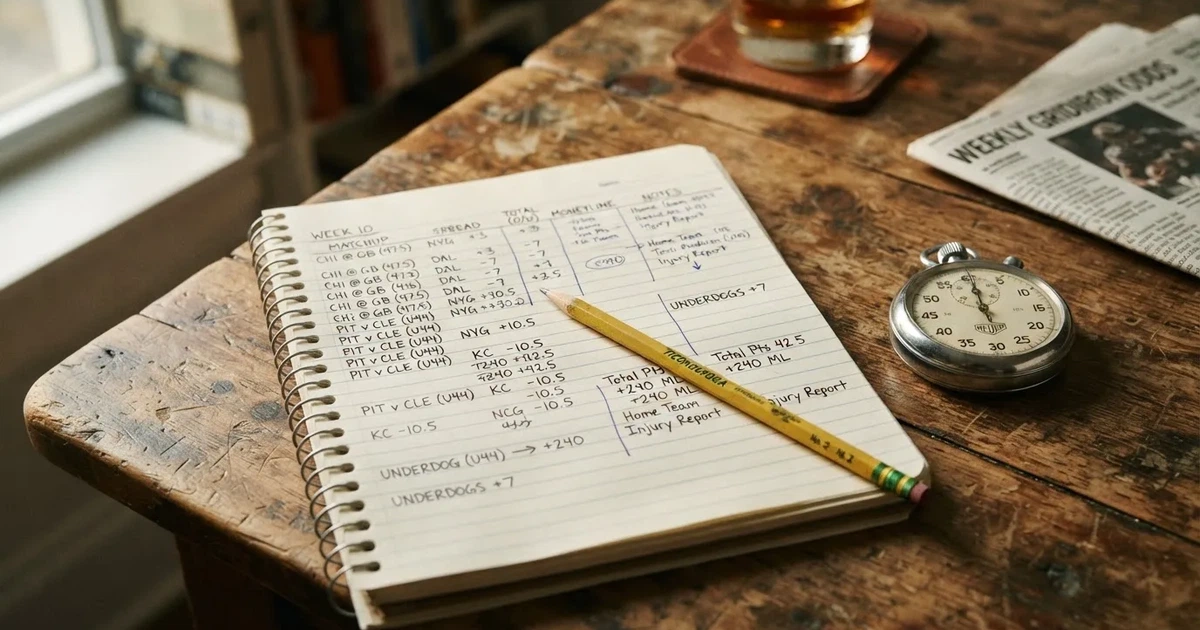
The search results for this subject are crowded with confident predictions and coupon-style picks, and the longer a reader spends in that market, the clearer it becomes that a tip and a value bet are not the same thing. A tip says who wins. A value bet says that the price on offer is bigger than the chance of winning justifies, after the bookmaker’s margin has been taken out. This guide is built around the second idea, because the second one is what a punter can actually do something with. It explains how the sport works, how a tip is put together in practice, what the odds are really saying, and where the standard offers from UK-licensed bookmakers either help or quietly cost. No pick is published anywhere in it, because nobody can know an outcome in advance, and a “sure thing” on this page would be a lie with a stake attached.
American football is a sport of set-piece plays and stoppages, four quarters of fifteen minutes of game clock each, eleven players a side on the field at any moment. The NFL runs 32 franchises split into two conferences of sixteen, plays a 17-game regular season over 18 weeks, and sends fourteen teams into the single-elimination playoffs. A touchdown is six points; the extra-point kick adds one, the two-point conversion adds two; a field goal is three; a safety, scored by the defence, is two. The 2025 season ended with Super Bowl LX at Levi’s Stadium on 8 February 2026, the Seattle Seahawks beating the New England Patriots 29-13, Kenneth Walker III named MVP. The next NFL season is now in play, and college football is back on the calendar from late August. That is the surface this guide sits on.
The fundamentals every tip rests on
A tip that names a winner without explaining how it was reached is just a guess, and a guess dressed as analysis is the most expensive thing a reader can bet with. The fundamentals underneath any serious approach are the same handful of things, and they deserve to be set out plainly because they are the inputs every other section in this page leans on.

Form is the first one, and it means more than the result of last week’s game. A team that won its last three matches can be running on a soft schedule, with the offensive line masking a quarterback nursing a shoulder, with a defensive coordinator who has been figured out by opponents in the second half of games. Form is the record, but the form that matters is how the record was built, against whom, and where the injuries and tactical trends sit.
Schedule strength is the second. An undefeated team out of one division can be untested against the kind of defensive front it meets in week nine. Strength of schedule, point differential against winning records, performance in the second half of back-to-back road games — these are the things that separate the actual contender from the one whose record looks better than its play.
Injuries are the third, and they are the thing that moves lines the most, the fastest, and the latest. A quarterback listed as questionable on the Friday before a Sunday game changes the spread. A starting cornerback ruled out at noon on game day changes the total. Reading injury reports is not a perk; it is the minimum, and the best readers are the ones who track what teams say publicly against what beat reporters say privately and weigh the difference.
Matchup data is the fourth. The defence that leads the league in pressure rate matters more against a quarterback who holds the ball than against one who throws it out in three seconds. The offence that runs the ball sixty percent of the time matters more against a defence that struggles to stop the run than against one built to force third-and-long. A trend across a whole season can be erased by one specific matchup in one specific week.
Home field is the fifth, and it is real but smaller than it sounds. NFL home teams win at a higher rate than visitors, but the spread already prices most of that in. The reader’s job is to know what the market has built in and where the residual edge — the small piece left over — might still be found, not to take home field as a reason on its own.
Weather is the sixth, and it sits behind a key fact about the sport: outdoor games in cold and wind play the games with fewer points. Totals adjust for that, but they adjust slowly, and the period before they catch up is one of the few places a careful reader can see real price drift. The seventh is pace of play, which decides how many possessions a game produces, which decides how many chances a prop bet has to land.
A tip that names a side, sitting on this list, is a tip a reader can think about. A tip without it is a tip the reader has to take on trust.
How the league actually runs
The NFL is the headline competition, and Super Bowl LX is now in the books. The next regular season begins in early September and runs 18 weeks to early January, with 14 teams reaching the post-season — seven from the American Football Conference and seven from the National Football Conference. The conference champions meet in the Super Bowl. The 32 teams are evenly split between the two conferences, and each plays 17 games with one bye week.

The college game runs the NCAA Division I Football Bowl Subdivision alongside the NFL calendar from late August into early January, with conference championship games in December and a four-team College Football Playoff in late December and early January. The NFL Draft in late April is the off-season pivot between seasons, and it matters because the players a team picks change its win total for the years that follow. Off-season free agency and trade activity begin in March. The window a reader cares about most — the window in which prices move most, and on which most betting volume is written — is the regular season plus the playoffs, plus the college bowl games and playoff in December and early January.
The Canadian Football League runs alongside the NFL, on a slightly different field (12 players a side, a longer and wider field, an extra down), and the rules on settlement vary between leagues. Most UK-licensed bookmakers quote NFL, CFL and major college football; some quote the UFL and other leagues. The reader who knows which competition a price applies to is ahead of the one who assumes the rules are the same everywhere.
Reading American football scoring
A bettor who has not seen a touchdown worth six points pay out as one, or who has not understood why a safety credited at two points swings a spread by more than two, will read prices with the wrong picture of the game. The scoring sequence shapes how a game finishes, and how it finishes shapes how bets settle.
A touchdown is six points, scored when the offence carries the ball into the end zone or catches a pass in it. After every touchdown the scoring team attempts either an extra-point kick (worth one point, almost automatic in the NFL) or a two-point conversion (worth two points, attempted from scrimmage and usually unsuccessful unless analytically justified). A field goal, kicked through the uprights, is three points, and is taken when the offence has stalled inside the opposition’s 35-yard line. A safety is two points awarded to the defence, scored by tackling the offence in its own end zone. A two-point conversion and a safety are the small numbers that change close games and the close prices around them.
The spread and the total are settled by the points that go up on the scoreboard, plus whatever overtime format the competition uses. NFL regular-season games that are tied at the end of overtime are a push on the spread and total; playoff games keep playing until a winner is decided. A bet that prices an overtime touchdown does not need it to land for a side to win the spread — it only needs the spread to be passed.
The bookmaker’s margin, and how to see it in the odds
Every price a bookmaker quotes carries a margin. The margin is the slice of every pound bet on a market the bookmaker keeps on average across the outcomes. It is the cost of being allowed to bet at all, and it sits inside the odds whether the reader sees it or not. It is also the most important number on this page, because it is the number that decides whether a tip the reader likes is actually a value bet once the price is on the screen.
For a market with two outcomes — say a spread at –3 on one side and +3 on the other, or a yes/no on a player prop — the margin is what the prices add up to when converted to probabilities. A decimal price of 1.91 on each side is an implied probability of about 52.4% on each side; that adds to 104.8%, and the extra 4.8% is the margin. The reader who bets at random will lose at a rate equal to that margin, over time and across many bets, before any skill is added.
The same calculation, applied to the 1X2 on an NFL game or a college game, gives the margin of that market. The margin on a two-way price of 1.90 / 1.90 — both sides priced the same, which is what a perfectly even matchup would look like in a clean book — is roughly 5.3%. State the result as a band, because the actual margin depends on the exact price the bookmaker is quoting at the moment, and on the bookmaker: a Premier League football match in the UK sits somewhere around 2–6% margin at the top of the market, a two-way NFL spread can run 4–6% at well-sharp books and higher at softer ones, an obscure college game at an offshore book can be 8–10% or worse. The reader who checks the price and runs the calculation sees where the cost is, and which markets are most worth a stake and which are most worth leaving. The reader who bets without running the calculation is paying the margin on every bet and not knowing it.
The margin is not a fee. It is the structural difference between what the bettor wins on a winning bet and what the bettor would win on a fair bet. A bettor who wins at a rate higher than the implied probability of the price they took, after the margin is removed, is making a long-term profit. A bettor who wins at a rate lower than that is paying for the privilege of betting. The difference between those two readers is not luck. It is the habit of working out the implied probability and comparing it against what they think the real probability is.
A short worked example makes the point plain. The reader thinks a team has a 55% chance of winning. The price on offer is 1.91, which is 52.4% implied. The 2.6-point gap between what the reader thinks and what the price implies is the value. The bet is worth a stake. If the reader thinks 50% and the price is 1.91, the price is fair at best and the bet is not worth a stake. If the reader thinks 55% and the price is 1.80 (55.6% implied), the bet is not worth a stake either: the reader’s edge is smaller than the margin, and the bet loses over time. Value is the comparison, not a sentiment.
Value bets and why no tip is ever certain
A value bet is a bet whose price is bigger than the chance of winning justifies, after the margin is taken out. The idea is older than the betting industry and is the standard any serious approach to betting uses to decide whether to back a thing. The trouble is that nobody knows the true probability of a sporting event, only an estimate of it, and the estimate can be wrong. A bet that looked like value in the morning can be a losing bet by the evening, and a streak of value bets that loses is a streak that will happen, because variance is part of the mathematics.
What a careful reader does is hold the discipline even when the variance runs against them. The bet is placed because the price is bigger than the estimate. The bet is sized so that a losing streak of ten or fifteen in a row does not break the bank. The bet is recorded, so the reader can come back later and see whether the prices they took actually beat the implied probability over hundreds of bets, or whether the early wins were luck and the late losses were the truth. A reader who does this is a reader who will know, in two years, whether they have an edge. A reader who bets on tips without recording the price and the reasoning will never know, and will keep betting on tips that may have been wrong from the start.
No tip is ever certain because no model is ever perfectly calibrated and no information set is ever complete. A team can lose its starting quarterback at the coin toss. A referee can call a penalty at the end of a half that changes the result. The edge a careful reader holds is small, on average, and is paid out over a long series of bets, not on a single Sunday. The reader who treats a tip as a guaranteed winner is the reader who will be hurt the most when it loses.
Staking and bankroll: what stops the loss being a disaster
A bankroll is the total amount the reader has set aside for betting, and a stake is what the reader wagers on a single bet. The relationship between the two is the discipline that stops a small edge turning into a small ruin.
A common staking rule is to risk no more than 1% to 5% of the bankroll on a single bet, depending on how confident the reader is in the price. A reader who goes higher than that is taking a chance the bankroll cannot absorb when the inevitable losing streak arrives, and the inevitable losing streak always arrives. A reader who goes lower than that is leaving an edge on the table when the price is strong.
Flat staking — the same unit on every bet — is the cleanest approach and the easiest to record. Proportional staking — sizing each bet as a percentage of the current bankroll — is more sophisticated, and ties the size of the stake to the bankroll so that the bet grows with the bank and shrinks with it. The two are both legitimate. What neither is, is a system that wins. Staking controls the size of the bet; it does not change whether the bet is a value bet. A reader with a 1% edge and a stake rule that oversizes bets will lose faster than a reader with a 1% edge and a stake rule that undersizes them. A reader with a –3% edge and the best staking rule in the world will still lose.
The same rule that applies to stake sizing applies to loss limits. A reader who decides, before the season, that the bankroll is £500 and that £200 of losses is the line at which they stop, has built a circuit breaker into the system. A reader who decides that in the moment is the moment to set the limit is the reader who will not set one. The bankroll and the loss limit are made on a Tuesday. They are observed on a Sunday.
How a price is built: the language of the market
A price, in decimal form, is the total return on a winning stake of one unit. A £10 stake at a price of 2.50 returns £25 — the £10 stake plus £15 of winnings. The same price in fractional form is 3/2 (the winnings of 1.5 for every 1 staked, plus the stake returned). A price of 1.91 in decimal is roughly 10/11 in fractional, evens is 1/1, odds-on is shorter than 1/1.
The starting price (SP) is the price the runner takes off, including the place terms for each-way bets. Best odds guaranteed (BOG) is the rule some bookmakers have on UK and Irish horse racing, where the bet is paid at the higher of the price taken and the SP. It is not offered on American football and is not relevant to this page.
Each-way betting is a British convention that pairs two bets of equal stake — one on the win, one on the place — and is settled at the place terms for the event. It is a horse-racing convention by origin and does not apply to American football in the same form.
A betting exchange is a peer-to-peer market where one punter backs an outcome and another lays it. The exchange takes a commission on net winnings and is the place where sharp bettors often move first. The exchange price is often sharper than the bookmaker price because there is no bookmaker margin baked in; the difference between the two prices is itself a piece of evidence about where the real probability sits.
Spread betting is different. A spread book quotes a spread (a range, for example 38–42 points), and the bet is settled on whether the actual outcome is above or below the spread. A spread bet is settled by stake times the number of points above or below, which is why a spread bet’s losses can be bigger than the stake. Spreadex, the long-running UK spread bookmaker, is regulated by the Financial Conduct Authority for its financial spread betting and by the Gambling Commission for its fixed-odds betting; the firm’s own terms state that spread betting losses can exceed the deposit, and that is the standard that distinguishes spread betting from fixed-odds betting. A reader interested in spread bets on American football will be on a different product from the one this guide is mostly about.
Bet types on American football
The spread is the headline market. A favourite at –3 must win by more than three points; an underdog at +3 must lose by less than three, draw, or win. The point total is set at a number — 47.5 is a typical NFL total — and the reader takes the over or the under. The moneyline is the straight winner, priced as a positive number for the underdog (the price on a +200 underdog returns £30 on a £10 stake) and a negative number for the favourite (–150 means a £10 profit requires a £15 stake). Props are proposition bets on individual events within the game: the first player to score a touchdown, the quarterback’s passing yards, the team’s total rushing yards. Derivatives are combinations of legs — same-game parlays, accas across multiple games — settled as one bet at one combined price.
A handicap or total that lands exactly on the quoted line is a push and bets are made void, unless a tie is offered as a separate selection. Sky Betting’s published American football rules state the convention and the framework is the same across the licensed UK market. Push rules are part of the price and should be read before the bet is placed.
Bet builders and accumulators
A bet builder is the same-game parlay in a UI: the reader takes two or more selections on the same game — for example, the favourite to win, the total to go over, and a player prop — and the price is the product of the individual prices. The price of the combined bet is more attractive than the price of each leg alone because the legs are correlated in some cases and uncorrelated in others. A careful reader checks each leg’s individual price before placing the combined bet; if the individual prices add up to a better number than the combined price, the combined bet is the wrong way to go.
An accumulator (acca) is a multi-game parlay: all legs must win for the bet to win, and the price is the product of the leg prices. The price is high because the variance is high. A five-leg acca at 2.00 per leg is 32.00, and the chance of all five legs winning is much smaller than the price implies. The same margin that sits inside a single price sits inside each leg, and the legs compound it. A acca insurance offer — a refund as a free bet if one leg loses — is a partial cushion against that compounding. It does not change the structural problem.
Free bets, price boosts and acca insurance each look like a piece of free value. They are not free, and the cost is hidden in the terms. A free bet whose stake is not paid back with a win is worth less than its face value by an amount that depends on the price the free bet is used at. A £10 free bet at a price of 3.00 is worth £20 on a winning bet (£10 × 2 = £20 of profit, because the £10 stake is not returned), and the value of that free bet over the variable prices of an active betting campaign is roughly £10 × (price − 1) ÷ price × payout share, which comes out at about £9 at a price of 3.00 and a payout share of 90%. A £10 free bet at 5.00 is worth closer to £14. The £10 face value is the headline. The realised value is something else.
Offers in landscape and seasonal free bets
The UK-licensed market runs a fairly standard set of seasonal promotions on American football. The weekly free-bet club, the price boost on a marquee game, the acca insurance on the Sunday card, the money-back-if-your-team-loses-on-a-touchdown offer. Each is described in the operator’s own terms and the actual figures — the stake to qualify, the minimum price, the wagering requirement if any, the expiry, the cap on free-bet winnings — are specific to the campaign. The figures change weekly; the structure does not.
A £10 free bet as part of a weekly club costs the operator whatever the realised value is and earns the operator whatever the bettor’s other activity is worth during the same window. The free bet is the marketing spend; the structural cost is whatever the bettor does with it. The licence terms now cap the wagering requirement on bonuses at 10x, which is a structural protection: a £10 bonus with a 50x wagering requirement used to mean £500 of qualifying bets; under the cap, it means no more than £100 of qualifying bets. Mixed-product promotions — an offer that requires gambling on two or more product types such as betting, casino, bingo and lottery, for example “bet on football to get free spins” — are not allowed. The cap is in force; it does not apply to every promotion in the same way, and the reader who sees “10x wagering” on a bonus will know it is at the rule’s edge.
The reader’s job is to compare offers on the same basis, which is what the offer actually pays back after the terms are read, not what the marketing says the offer is worth. A price boost that moves a price from 1.91 to 2.00 is a small bump. A price boost from 6.00 to 8.00 on a long shot is a large-looking bump that costs nothing real because the long shot is a long shot either way. The arithmetic is the comparison, and the comparison is what makes the offer either worth the time or not.
Live betting and in-play markets
Live betting, or in-play, is the act of placing bets after the game has started, with prices updated ball by ball, drive by drive, quarter by quarter. The licensed UK market has offered it for years, and the controls are the operator’s licence conditions and customer-protection duties rather than a statutory prohibition. A drive that swings the spread by three points and the total by seven is a market in motion, and the in-play price is the price the bookmaker wants to be at after that drive, not the price the bookmaker was at before it.
The standard in-play markets on an NFL fixture are the next-play outcome (will the next play be a run, a pass, or a score), the next score type, the result of the current drive, and the live spread and total. A bettor who understands the game can read the drive chart and the down-and-distance, and can spot when the in-play price has lagged the real probability, and that is the spot a value bet can be found. The lag exists but it is small, and it is most often found on markets where the price is set by an algorithm that has not caught up to a key injury or a key momentum shift.
The cash-out feature is the bookmaker’s offer to settle a bet early at a price the bookmaker sets, before the event has finished. A cash-out is a tool for cutting a loss or for taking a profit before the end, and the price the bookmaker offers is the bookmaker’s price, not a market price, and the spread between the bookmaker’s cash-out price and the real value of the bet at that moment is the bookmaker’s edge on the cash-out. A cash-out used to lock in a profit before a late swing is a cash-out that cost something. The reader who cash-outs it understands the price they got and the price they could have gotten by holding. The reader who cash-outs out of nerves will not.
Spread betting on American football
Spread betting on sports is a different product from fixed-odds betting. The bettor does not pick a winner at a price; the bettor picks a direction on a spread (a range of outcomes, for example 38–42 points) and the bet is settled by stake times the number of points above or below the spread. A £5 stake on the over at 38–42 is worth £5 × (points − 40) if the points come in above 40, and a £5 loss per point if the points come in below 40. A spread bet on a total of 48 points settles at £40 of profit on the over at a £5 stake.
The product is popular in the UK because the payouts scale with the size of the win, and because a confident bettor can win more on a spread bet than on a fixed-odds bet of the same stake. The product is also the one where the losses can exceed the deposit, and that is the point Spreadex’s own homepage makes for its spread book. A spread bettor at a fixed-odds bookmaker is on a different page from this guide. The reader who wants spread betting on American football should be reading the spread book’s terms before reading this guide.
Responsible gambling and the British framework
The UK approach to gambling harm is built around three ideas: prevention, identification and support. Prevention is the licence condition that requires identity verification before the first deposit — name, address and date of birth — which means no anonymous play at a GB-licensed operator. Identification is the financial vulnerability check (in force since 30 August 2024) that runs when deposits minus withdrawals exceed £150 in a rolling 30 days, and the financial risk assessment that the Commission has announced in a staged plan with no start date as of mid-2026. Support is the network of services the operator has to point the bettor towards: GamCare and its National Gambling Helpline, GambleAware, the NHS gambling clinics, Gamblers Anonymous.
GAMSTOP is the national self-exclusion scheme, mandatory for all GB-licensed online operators since 31 March 2020. A bettor who registers with GAMSTOP is excluded from every GB-licensed online operator for six months, one year, five years, or five years with auto-renewal, and the minimum period runs for a further seven years unless the bettor asks GAMSTOP to remove it. The exclusion covers online sites and apps, not betting shops, which use a separate service. A bettor who has signed up to GAMSTOP cannot open a new account at any of the operators on this page. The scheme is the single most important protection available to a British bettor who feels the betting has gone too far.
A bettor who is concerned about their own betting, or about the betting of someone they know, can contact GamCare on the National Gambling Helpline, contact GambleAware for information and self-assessment tools, contact the NHS gambling clinics in their region for treatment, or attend a Gamblers Anonymous meeting. The contact details are at the end of this page.
A bettor who has signed up to GAMSTOP and is gambling at an unlicensed offshore site has lost the protection the licence brings — no GAMSTOP, no Commission complaints route, no approved dispute-resolution body, no British consumer redress. The unlicensed site is not “safe” by default, and the bettor is paying for that with their own money.
Crypto, e-wallets and the reality at a UK-licensed bookmaker
The unlicensed offshore market has been built around cryptocurrency deposits for years, on the idea that crypto is pseudonymous and outside the banking system. The licensed UK market has moved the other way. Identity is verified before the first deposit, source-of-funds questions are normal at higher spend under the money-laundering rules, and a British named-account rule for payment methods is the operating norm at GB-licensed operators.
The practical effect is that a UK-licensed bookmaker does not offer anonymous play. The bettor’s name, address and date of birth are checked against public records; the bank account or card used to deposit is in the bettor’s name; the bettor’s stake is recorded on the operator’s file. A bettor who wants the privacy of an unlicensed site has to give up the protection of a licensed site. The trade is real and it is a trade.
E-wallets — Skrill, Neteller, PayPal — are widely accepted at UK-licensed bookmakers, and the credit-card ban that came in on 14 April 2020 does not apply to debit cards or to bank-based payments. A credit-card-funded payment through an e-wallet is still banned, because the source of the money is a credit card and the rule applies to the source. The licensed market accepts a wide range of payment methods. It does not accept anonymous ones, and that is the policy, not a quirk.
The reader who wants to bet on American football with bitcoin or with ethereum is the reader who is on an unlicensed site. That site will not be on this page, because this page is about the licensed UK market, and the licensed UK market has no anonymous bitcoin betting. The reader who wants the licensed market should read the next section and pick a brand from the table at the end.
The licensed UK market for American football betting
The UK market for betting on American football is run by around a hundred operators on the Gambling Commission’s public register, not by the ten on this page. The ten on this page are the reviewed set, and the reviewed set is not the licensed set; the licensed set is bigger. Every operator reviewed here is a GB-licensed bookmaker or betting intermediary, all take part in GAMSTOP, all offer American football in some form, and none is “the only” licensed brand. The table below is a snapshot of the licence, the licence holder, and the relevant feature the operator’s own terms state on the subject. The numbers are the operators’; the snapshot is this page’s.
| Brand | Licence number and holder | Operator’s own terms on American football betting |
|---|---|---|
| BetVictor | UKGC remote licence 039576 (account 39576), held by BV Gaming Limited | Best Odds Guaranteed on UK and Irish horse racing; enhanced live race streaming; a BetFinder feature; Smart Stats; NFL and college markets via the standard sportsbook |
| 10bet | UKGC remote licence 043173 (account 43173), held by Blue Star Planet Limited | Sportsbook covers football, tennis and horse racing; cash out, bet builder and live streaming on the main product |
| Lottoland | UKGC remote licence 038991 (account 38991), held by EU Lotto Limited | Combined casino, lottery betting, sports betting and scratchcards on a single app; sportsbook includes American football |
| Bet600 | UKGC remote licence 044731 (account 44731), held by Tyche Tech Limited | Best Odds Guaranteed on horse racing (paid at the SP if bigger than the price taken); sportsbook includes American football |
| Sporting Index | UKGC remote licence 027343 (account 27343), held by Sporting Index Limited | Fixed-odds and spread betting on the same platform; new-customer offer: a £10 fixed-odds bet at minimum odds of 1/2 unlocks three £10 fixed-odds free bets, three £5 Total Goals spread bets, three £5 Winning Favourites spread bets and a £1 Race Index spread bet, with the qualifying bet not placed in play and not cashed out |
| BetTom | UKGC remote licence 064959 (account 64959), held by Bet Tom Limited | Sports welcome offer: 50% back as a free bet up to £50, with a matching 50% back up to £50 as free slot funds for casino play |
| Geoff Banks | UKGC remote licence 054095 (account 54095), held by GB Sports Advisors Limited | Live in-play prices and ante-post prices on future events, published by GB Sports Advisors Ltd |
| Star Sports | UKGC remote licence 009177 (account 9177), held by Star Racing Limited | Self-described as the UK’s leading independent bookmaker; sportsbook alongside virtual sports, casino and live casino |
| Fitzdares | UKGC remote licence 000400 (account 400), held by Fitzdares Limited | Cash out, accumulators, Lucky 15s, specials and ante-post markets on horse racing, football, tennis, rugby, cricket, golf and American football, with in-play live odds |
| DragonBet | UKGC remote licence 064908 (account 64908), held by DragonBet Ltd | Cash out both in-play and pre-match, and live streaming of racing |
The licence numbers and holders in the table are taken from the Commission’s public register; the operator’s own terms are taken from each operator’s site or app listing. The Market on American football prices and market depth varies between brand-specific books and is set by each brand’s own trading team. None of the brands on this page is the cheapest place to bet on every American football fixture; each is one of a number of options.
BetVictor has the longest-running identity on the table and is the only brand whose UK site has the BetFinder smart-assist feature, with Smart Stats sitting beside the standard market view. The Best Odds Guaranteed on horse racing is the brand’s headline, but it does not apply to American football. 10bet is the bookmaker whose sportsbook surfaces the cash-out, bet builder and live streaming combination across the standard product, and the coverage on American football is in the standard feed rather than in a separate product.
Lottoland is the brand that combines casino, lottery betting, sports betting and scratchcards on one app, and the American football markets sit inside the sportsbook. Bet600’s Best Odds Guaranteed is paid at the SP for horse racing and is not extended to American football. Sporting Index is the only fixed-odds and spread book on the table, and the new-customer offer includes both a fixed-odds component and a spread-betting component, with the qualification structure that requires a fixed-odds bet at minimum odds of 1/2 to unlock both.
BetTom is the only brand on the table whose welcome offer pairs a sportsbook free-bet component with a casino free-spins component — and that pairing is, from January 2026 onwards, the kind of mixed-product promotion that is no longer allowed at a licensed operator. The offer is described in the operator’s own terms; whether the casino component still sits beside the sportsbook component is for the reader to check at the time of claiming. Geoff Banks is the smallest name on the table and is run by GB Sports Advisors Ltd; the offer is ante-post and in-play prices on future events.
Star Sports is the only self-styled “UK’s leading independent bookmaker” on the table, and the product extends to virtual sports, casino and live casino alongside the sportsbook. Fitzdares is the only brand on the table that names American football explicitly in the markets description, with the same bet-type range (cash out, accumulators, Lucky 15s, specials, ante-post) as it offers on the other sports. DragonBet is the only brand that pairs cash out in-play with live streaming of racing, though the streaming is on the racing product, not the American football feed.
The judgement on this set depends on what the reader is doing. A reader who wants the longest-running brand with the smart-assist features will lean to BetVictor; a reader who wants cash-out, bet builder and live streaming as a single bundle will lean to 10bet; a reader who wants spread betting alongside fixed-odds will lean to Sporting Index; a reader who wants the ante-post product on a small, focused book will lean to Geoff Banks; a reader who wants a brand whose own marketing names American football in the same breath as horse racing and the other UK staples will lean to Fitzdares. No single brand is best for every reader, and the table is meant to make the comparison easier, not to make it unnecessary.
What a price pays back, worked out
The calculation on this page is the margin, the cost of the privilege of betting. Take an illustrative two-way market at decimal odds of 1.90 on each side. The implied probability of each side is 1 ÷ 1.90, or about 52.6%. Two sides at 52.6% each add up to 105.3%, which means the market pays back 1 ÷ 1.053, or about 95.0% of every unit bet, and the margin is roughly 5.3%. That is the cost the bettor pays on a random pick on this market, before any skill is added.
The arithmetic is the same on every market, and the calculation tells you what the market costs in plain numbers. A market with both sides priced at 1.91 has a margin of about 4.8%; a market at 1.95 / 1.95 has a margin of about 2.6%; a market at 1.80 / 1.80 has a margin of about 11.1%. The 1.90 / 1.90 example sits in the middle of that range, and the margin of about 5% is the headline figure to remember. A two-way NFL spread at a top book runs in this band. A two-way NFL spread at an obscure offshore book can run twice this. The reader who runs the calculation sees the difference.
A market with three or more outcomes — the 1X2 on a Premier League football match, the field of a major horse race, the outright winner of a Super Bowl — works the same way: implied probabilities add to more than 100%, and the overage is the margin. A Super Bowl outright at 12.00 on each of 12 contenders is 1 ÷ 12 = 8.3% per side, 12 × 8.3% = 100% (no margin), which never happens in practice; the real overage is the margin.
The point is that the margin is the structural cost, and it is the number that turns a tip into a value bet. The reader who bets at 1.90 / 1.90 on a coin flip pays 4.6% on every pound on average. The reader who bets at 1.95 / 1.95 on a coin flip pays 2.6%. The reader who bets at 1.91 / 1.91 on a real edge of 15% makes a long-term profit; the reader who bets on an edge of 5% loses over time. The arithmetic is the comparison, and the comparison is what makes the difference.
Working out a payout from stake and odds
The return on a winning bet is stake × odds. A £10 stake at decimal odds of 2.50 returns £25 — the £10 stake plus £15 of profit. A £10 stake at decimal odds of 1.91 returns £19.10, which is the £10 stake plus £9.10 of profit. A £25 stake at decimal odds of 3.40 returns £85. The profit is always stake × (odds − 1). The total return is always stake × odds.
For an accumulator, the price is the product of the leg prices. A four-leg acca with legs at 1.80, 2.20, 1.95 and 1.91 has a combined price of 1.80 × 2.20 × 1.95 × 1.91 = 14.07. A £5 stake on that acca returns £70.35 if all four legs win. The price compounds because the bets compound: each leg pays its own return, and the return of the previous leg becomes the stake of the next. The compounded price looks attractive on paper; the compounded variance is what makes accas hard to win.
Each-way bets double the stake: a £5 each-way bet is a £5 win bet and a £5 place bet. The total stake is £10, and the bet settles at the place terms if the selection places but does not win. The place terms on American football are not the same as on horse racing, and a reader should check the operator’s terms before placing an each-way bet on a Super Bowl or on a college football future.
The point is that the calculation is straightforward, and the reader who can run it is the reader who will read a price and know whether it is worth the stake. The calculation does not change the odds; the calculation tells the reader what the odds mean.
Predictions and tipsters
The market for American football predictions is bigger than the market for the sport itself in some corners of the internet, and the quality of the prediction varies wildly. A prediction that names the winner and the score is a prediction that has overpromised. A prediction that names the price the bettor should take is a prediction that has done half the work; the other half is the bettor’s own check that the price on the screen is the price the tip quoted.
A tipster who publishes picks but not the price at which the pick was taken is a tipster who has removed half of what makes a pick useful. A tipster who publishes the closing price and the win/loss record over a season is closer to useful, and the reader who follows a tipster over hundreds of picks will see the long-term strike rate rather than the short-term hot streak. A strike rate of 55% at average odds of 1.91 is a profitable strike rate after the margin; a strike rate of 60% at average odds of 1.70 is unprofitable. The math is the same as it is on a single bet.
What a tipster cannot give the reader is certainty. The next pick is not what will happen. The tip is one input among several; the price is another; the reader’s own knowledge of the sport is a third; and the staking discipline that protects the bankroll is a fourth. A reader who combines all four will do better over a season than a reader who relies on any one of them alone.
Crypto, anonymity and the licensed alternative
The unlicensed market has built a small ecosystem around cryptocurrency betting, on the idea that bitcoin and ethereum deposits are outside the banking system and offer a measure of privacy the licensed market does not. The licensed market does not offer that privacy, and the difference is not an accident: it is the policy.
The licensed market verifies the bettor’s identity before the first deposit. The bettor’s name, address and date of birth are checked against public records. The bank account or card used to deposit is in the bettor’s name. The bettor’s stake is recorded on the operator’s file. The bettor’s withdrawals go back to the same bank account. The trade-off is that the bettor has lost the privacy, and the bettor has gained the protection: GAMSTOP, the Commission’s complaints route, the approved dispute-resolution body, the British consumer redress, the 10x bonus cap, the £150 vulnerability check, the licensed payment methods, the credit-card ban. The reader who wants the privacy is the reader who is on an unlicensed site, and the unlicensed site does not give the protection.
The choice is not “safe versus unsafe”. The choice is “one set of protections and no privacy, or no protections and some privacy”. The reader who values the protections will bet at a licensed operator. The reader who values the privacy will bet at an unlicensed site. The reader who values both does not have both, because no operator offers both.
Bonuses, free bets and what the headline hides
The headline on a welcome offer is the bonus amount; the headline on a weekly free-bet club is the free bet; the headline on a price boost is the boosted price. Each headline hides a cost the reader pays through the terms. A welcome bonus of “100% up to £100” with a 10x wagering requirement costs the reader £1,000 of qualifying bets, settled at the operator’s prices. A free bet of £10 at odds of 3.00 is worth roughly £9 on average, because the stake is not returned with a win. A price boost from 1.91 to 2.00 on a 60% chance is the real edge; a price boost from 6.00 to 8.00 on a 10% chance is the look of the edge without the substance.
The 10x cap on wagering requirements is the single biggest structural protection the licensed market has built in recent years. A £10 bonus at 50x used to mean £500 of qualifying bets; under the cap, no more than £100. A £50 bonus at 50x used to mean £2,500 of qualifying bets; under the cap, no more than £500. The cap is in force since 19 January 2026 and applies to every licensed UK bookmaker. The reader who sees a 50x offer on a UK site is reading an offer that does not comply with the licence, and the offer should be raised with the operator before being claimed.
Mixed-product promotions — an offer that requires gambling on two or more product types, such as betting, casino, bingo and lottery, for example “bet on football to get free spins” — are banned. The ban is in force and applies to every licensed UK bookmaker. The reader who sees a UK-licensed offer that requires a sportsbook bet to unlock a casino bonus is reading an offer that does not comply, and the offer should be raised with the operator before being claimed.
The offer at Sporting Index, in the table above, is a fixed-odds and spread book new-customer offer. The qualification is a £10 fixed-odds bet at minimum odds of 1/2, and the qualification bet cannot be in-play or cashed out. The free bets are £10 each on fixed-odds and £5 each on spread bets. The offer is described in the operator’s own terms; the actual realised value depends on the prices the reader takes, on the prices the operator quotes on the legs the free bets are used on, and on whether the reader bets the way the terms require.
The offer at BetTom, in the table above, is a sportsbook welcome offer paired with a casino free-spins component. Whether that pairing is still offered under the January 2026 mixed-product rules is for the reader to check on the operator’s site at the time of claiming. The terms on the App Store listing describe the offer as it stood when the listing was last updated, and licence rules can change what is actually offered in between.
The comparison that closes this page
The angle of this page is choice — which paths exist and who each one suits. The paths that exist on this page are four, and the reader’s job is to pick the one that fits the situation.
The first path is the licensed UK bookmaker with the standard sportsbook, the standard promotions, and the standard protections. BetVictor, 10bet, DragonBet, Fitzdares, Star Sports and Bet600 sit on this path, and they are the right answer for most readers. The licence is the protection; the GAMSTOP membership is the backstop; the LCCP compliance is the floor on the marketing. The trade-off is verification before the first deposit, no anonymous play, and the source-of-funds questions at higher spend.
The second path is the licensed UK bookmaker with the combined product: casino, lottery, scratchcards and sportsbook on a single app. Lottoland sits on this path, and it is the right answer for a reader who wants the other gambling products alongside the sportsbook and who will not be drawn into the casino side of the app when the betting side is what they came for. The trade-off is the proximity of the other products.
The third path is the licensed UK bookmaker with the spread-betting product. Sporting Index sits on this path, and it is the right answer for a reader who understands spread bets and accepts that the losses can exceed the deposit. The trade-off is the spread bet’s specific risk profile and the additional regulatory layer that puts financial spread betting under the Financial Conduct Authority.
The fourth path is the licensed UK bookmaker with a small, focused offer. Geoff Banks sits on this path, and it is the right answer for a reader who wants the ante-post product on a small bookmaker and is comfortable with a less well-known brand. The trade-off is the smaller market depth and the narrower promotional offer.
The unlicensed offshore path is not on this page. The reader who wants the unlicensed path knows what it offers and what it costs, and this page is built around the licensed alternative. The next section walks through the top reviewed brands, and the table closes by walking through the licence numbers, the licence holders, and the operator’s own terms on American football.
BetVictor — long-running brand with the smart-assist layer
BetVictor has been in UK betting for decades, and the current UK site is held by BV Gaming Limited under Gambling Commission account 39576. It holds an operating licence for remote general betting on real events. The brand’s marketing leads on Best Odds Guaranteed for UK and Irish horse racing, which does not extend to American football, and on the live race streaming product. The Smart Stats feature sits beside the standard market view, with BetFinder as the smart-assist tool for racing.
The American football markets are in the standard sportsbook feed, with spreads, totals, moneylines, props and derivatives. BetVictor suits a reader who wants the longest-running identity with smart-assist features and is happy to use the horse-racing product as the price-discovery side. Readers seeking a tighter focus on American football or the spread-betting product alongside the fixed-odds one will find better options elsewhere.
10bet — cash-out, bet builder and live streaming as a bundle
10bet’s UK sportsbook is held by Blue Star Planet Limited under Gambling Commission account 43173, operating under a standard UK remote licence for general betting on real events. The product covers football, tennis and horse racing, with cash-out, bet builder and live streaming features on the main product.
American football markets are inside the standard feed. Its strength lies in bundling cash-out, bet builder, and live streaming on the same product, the bundle a careful reader of in-play markets will look for. The marketing focuses on football, tennis, and horse racing, with American football in the broader feed.
10bet suits a reader who wants those in-play features as a single offering and is happy with the standard sportsbook layout. Readers wanting the racing product for price-discovery or ante-post betting on a small book will find better options elsewhere.
Lottoland — combined casino, lottery, sports and scratchcards
Lottoland’s UK site is held by EU Lotto Limited under Gambling Commission account 38991, with a remote general betting licence for Great Britain. Its app combines casino, lottery, sports betting and scratchcards, with American football markets in the sportsbook.
This brand offers single-app access to all four product types. The trade-off is the proximity of the casino, lottery and scratchcard products, as marketing often draws readers into those products alongside the betting. Disciplined readers who stick to the sportsbook will be fine, though the proximity can be crowded for others.
Lottoland suits a reader who wants the single-app bundle and is disciplined about staying on the sportsbook side. Readers wanting the sportsbook without other products or the racing-focused identity of a specialist will find better options elsewhere.
Bet600 — Best Odds Guaranteed on horse racing
Bet600’s UK site is held by Tyche Tech Limited under Gambling Commission account 44731, authorised by the UKGC for remote general betting on real events. The brand offers Best Odds Guaranteed on horse racing (paid at the starting price when higher than the price taken); this is the standard UK racing feature and does not extend to American football.
American football markets are inside the standard feed. Its strength is the horse-racing product and the accompanying Best Odds Guaranteed feature. The trade-off is that American football sits in the broader feed, and marketing does not lead with it.
Bet600 suits a reader who wants a strong horse-racing product with Best Odds Guaranteed and is happy to take the American football product in the broader feed. Readers seeking American football as the headline will find better options elsewhere.
Sporting Index — fixed-odds and spread betting on the same platform
Sporting Index’s UK site is held by Sporting Index Limited under Gambling Commission account 27343, which provides a remote licence for general betting on real sporting events. The product runs fixed-odds and spread betting on the same platform. The new-customer offer pairs fixed-odds free bets with spread-bet credits, requiring a £10 fixed-odds bet at 1/2 or greater (not in-play or cashed out) to qualify.
The main draw is the combination of fixed-odds and spread betting on a single licence. The trade-off is the additional regulatory layer on the financial spread-betting product, which sits under the Financial Conduct Authority, and the specific risk that losses can exceed the deposit. Readers who understand the spread product and are happy with that layer will find Sporting Index suitable.
Sporting Index suits a reader who wants the spread-betting product alongside the fixed-odds one on a single licence. Readers uncomfortable with the spread-betting risk profile or seeking fixed-odds alone will find better options elsewhere.
BetTom — sportsbook welcome offer with a casino pairing
BetTom’s UK site is held by Bet Tom Limited under Gambling Commission account 64959, with an operating permit for remote general betting. The sports welcome offer is 50% back as a free bet (up to £50) with 50% back as free slot funds (up to £50). As this pairing may conflict with mixed-product promotion rules introduced in January 2026, readers should check the operator’s current site at the time of claiming to verify the offer structure.
Its strength is the welcome offer and the size of the free bet relative to qualification. The trade-off is the offer’s mixed-product structure. Readers wanting a sportsbook-only welcome offer will not find that here.
BetTom suits a reader who is happy with the welcome offer as it stands at the time of claiming, and who will verify terms before claiming. Readers seeking a sportsbook-only product without casino pairings will find better options elsewhere.
Geoff Banks — small, focused book with ante-post and in-play
Geoff Banks’ UK site is held by GB Sports Advisors Limited under Gambling Commission account 54095, authorised to provide remote betting facilities for real-event sports. The product offers live in-play and ante-post prices on future events.
Its focus is on ante-post and in-play pricing within a single-operator identity. The American football markets are inside the in-play and ante-post feeds. The trade-off is smaller market depth and narrower promotions compared to larger books.
Geoff Banks suits a reader who wants a small, focused book with ante-post prices and is comfortable with a smaller market depth. Readers wanting big-brand features or a racing specialist’s product will find better options elsewhere.
Star Sports — the UK’s leading independent bookmaker
Star Sports’ UK site is held by Star Racing Limited under Gambling Commission account 9177, which holds the UK remote licence for general betting on real events. This brand identifies as the UK’s leading independent bookmaker, with products extending to virtual sports, casino and live casino.
The main draw is this independent bookmaker identity and product breadth. American football markets are inside the sportsbook feed. The trade-off is the focus on that independent identity, with smaller market depth on American football compared to larger, racing-led brands.
Star Sports suits a reader who wants that independent bookmaker identity and product breadth. Readers seeking smart-assist features or spread-betting products will find better options elsewhere.
Fitzdares — American football named alongside horse racing and football
Fitzdares’ UK site is held by Fitzdares Limited under Gambling Commission account 400, and the licence is the standard remote general betting standard (real events). The brand’s own marketing names American football in the same breath as horse racing, football, tennis, rugby, cricket and golf, and the product includes cash out, accumulators, Lucky 15s, specials and ante-post markets across those sports, with in-play live odds. The brand is the only one on the table that names American football explicitly in the markets description.
The American football product is inside the standard feed and is named in the marketing alongside the racing and football staples. The trade-off is the brand’s positioning as a premium product, with the price level that goes with it. A reader who wants a brand that names American football explicitly and is happy to pay the premium for it will find Fitzdares at the right end of the comparison.
The judgement on Fitzdares is that it is the right brand for a reader who wants the brand’s explicit naming of American football and is happy with the premium positioning. A reader who wants the smart-assist features or the spread-betting product will not find that here.
DragonBet — cash out in-play and live racing streaming
DragonBet’s UK site is held by DragonBet Ltd under Gambling Commission account 64908, and the licence is the standard remote general betting standard (real events). The product pairs cash out both in-play and pre-match with live streaming of racing. The cash-out feature is on the sportsbook product; the live streaming is on the racing product. The American football markets are inside the standard feed.
The brand’s edge on this page is the combination of in-play cash-out and racing streaming. The trade-off is that the racing streaming is on the racing product, not the American football feed, and a reader who wants the in-play cash-out feature as a sportsbook feature will find it. A reader who wants the smart-assist features or the spread-betting product will not find that here.
The judgement on DragonBet is that it is the right brand for a reader who wants the in-play cash-out feature on the sportsbook product and is happy with the racing streaming as the streaming product. A reader who wants the racing product as a price-discovery side will find the Best Odds Guaranteed at BetVictor or Bet600 instead.
Choosing between them
The review closes on a comparison rather than a winner. The brand a reader picks depends on the reader, and the table is meant to make the trade-offs visible.
A reader who wants the longest-running identity with the smart-assist layer goes to BetVictor. A reader who wants cash-out, bet builder and live streaming as a single bundle goes to 10bet. A reader who wants a single-app bundle across casino, lottery, sports and scratchcards goes to Lottoland. A reader who wants the horse-racing product with Best Odds Guaranteed goes to Bet600. A reader who wants the spread-betting product alongside the fixed-odds product goes to Sporting Index. A reader who wants the welcome offer that pairs a sportsbook free bet with a casino component goes to BetTom — and checks the current terms before claiming. A reader who wants a small, focused book with ante-post prices goes to Geoff Banks. A reader who wants the independent bookmaker identity and the product breadth goes to Star Sports. A reader who wants the brand that names American football explicitly in its marketing goes to Fitzdares. A reader who wants the in-play cash-out feature on the sportsbook product with the racing streaming as the streaming side goes to DragonBet.
Each of those choices is a coherent answer to the reader’s situation. None of them is a universal answer.
Where this leaves the reader
A punter who came to this page looking for tips has found a guide instead, and the guide’s point is that a tip is not a value bet unless the price makes it one. The market on American football is large, the licensed UK market is well-regulated, and the operators on this page offer American football through different products at different price points. The reader who reads the section on the margin, runs the calculation on the prices they see, and reads the offers at the operator’s own terms is the reader who will know, in a season or two, whether they have an edge.
The reader who came for free bets has found that a free bet is worth its face value less the cost of not having the stake returned, and that the realised value depends on the prices the free bet is used at. The reader who came for live betting has found that the in-play markets are the markets where the price lags the real probability, and that the lag is small and easily missed.
The reader who came to check their own behaviour has found the section on responsible gambling, and the section names the services a British bettor can contact: GamCare and the National Gambling Helpline, GambleAware, the NHS gambling clinics, Gamblers Anonymous. A reader who has signed up to GAMSTOP cannot open a new account at any of the operators on this page, and that is the protection the licence brings. A reader who has not signed up to GAMSTOP and feels the betting has gone too far can sign up at any time and the protection will follow.
The reader who came for the table has found it at the head of this section, and the licence numbers and holders are the numbers to check against the Commission’s public register. The reader who came for the comparison has found it across the ten brands on this page, and the comparison is meant to make the trade-offs visible rather than to settle them.
A reader who came for a prediction has found a guide instead. The prediction is what the bettor does with the price on the screen, the form underneath the pick, the staking rule above the bet, and the bankroll behind the staking rule. None of those is a prediction in advance. All of them are what makes a tip useful.
Frequently asked questions about American football betting
How do I bet on American football?
Place a fixed-odds bet at a UK-licensed bookmaker with a Gambling Commission remote licence. Pick a market — the spread, the total, the moneyline or a player prop — choose a price, and place a stake. Identity is verified before the first deposit, the bet is settled at the price taken, and the return is stake × price on a winning bet. No prediction in advance is certain, and the bettor’s edge comes from comparing the price to an estimate of the real probability.
What does American football betting involve?
A bet on the outcome of an NFL, CFL or college football game, or on a market inside one of those games. The main markets are the spread (a margin of victory), the total (combined points), the moneyline (the straight winner) and player props (a stat for an individual player). The sport is the four-quarter format of the NFL and the college equivalent, with the 17-game NFL regular season running from early September to early January and the playoffs through to the Super Bowl in February.
Where can I find the top American football odds?
Compare prices at multiple UK-licensed bookmakers before placing a bet. The market moves between books and between brands, and a price that is 5% bigger at one brand than at another is a price worth taking. The licensed brands in the table at the head of the operator section all quote the standard markets on NFL and college football, and a betting exchange may quote a sharper price than any bookmaker because there is no bookmaker margin baked in.
What is a value bet and why is no tip ever certain?
A value bet is a bet whose price is bigger than the chance of winning justifies, after the bookmaker’s margin is taken out. The reader estimates the probability, runs the calculation to find the implied probability in the price, and compares the two. No tip is ever certain because no estimate of the true probability is perfect and no information set is complete; the value is the comparison over a long series of bets, not the certainty of the next one.
What is the bookmaker’s margin and how can it be seen in the odds?
The margin is the slice of every pound bet on a market the bookmaker keeps on average across the outcomes. It sits inside the odds as an overage: the implied probabilities of all outcomes add up to more than 100%, and the overage is the margin. On an illustrative two-way market at 1.90 / 1.90 the implied probabilities add to about 105.3% and the overround is roughly 5.3%; the margin is 5.0%. The reader’s cost on a random pick at this market is around 5p on every pound bet.
How is the return on a bet worked out from the stake and the odds?
The return on a winning fixed-odds bet is stake × decimal odds. A £10 stake at 2.50 returns £25 — the £10 stake plus £15 of profit. The profit alone is stake × (odds − 1), and the total return is stake × odds. On an accumulator, the price is the product of the leg prices and the same formula applies to the total stake.
US & other team sports – Inplayguide.com
Content created by the «Inplayguide.com» team
